
Our History
Japanese legal studies at Columbia Law School has a rich history. The center is truly one of a kind. Founded in 1980, it is the first and only center focused on Japanese law in the United States.
By Katherine Towler, Contributing Editor
This article was written in 2005 as part of the 25th anniversary of the Center.
COLUMBIA LAW SCHOOL’S Center for Japanese Legal Studies turns 25 this year, a coming of age that coincides with enormous changes in the Japanese legal system, many influenced by the exchange of ideas the Center has fostered. Columbia, the first law school in the United States to offer courses in Japanese law, now has 250 graduates - both Japanese and American - working in Japan as lawyers, academics, judges, and government officials. These Columbia graduates have been instrumental in reforming the judicial system and modernizing the practice of corporate law in Japan, reforms that are shaping the future of Japanese society.
“From its inception, the aim of the Center has been to facilitate understanding of the Japanese legal system through teaching and research, for both Japanese and American students and scholars,” says Dean David Schizer, who is traveling to Japan this summer with Director and Professor Curtis J. Milhaupt ’89.“Columbia’s leadership in the area of Japanese law is embodied in the work of the Center.”
The Center administers a wide range of programs and maintains extensive ties to Columbia’s Weatherhead East Asian Institute and the Business School’s Center on Japanese Economy and Business. Among the Center’s offerings are courses, faculty and student exchanges, support for Japanese scholars to visit Columbia, speaker series, and conferences in Tokyo - and all this happens without a building or even an official doorway.
“People frequently come into my office looking for the Center for Japanese Legal Studies,” Professor Milhaupt explains. “I tell them, ‘You’re looking at it.’ The Center is not a physical place. It’s a large network of people and programs linking the Law School to legal issues in Japan.”
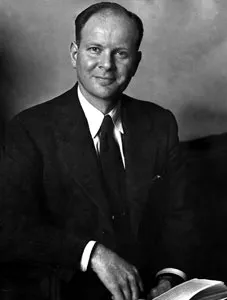
Founded in 1980 with financial support from the Fuyo Group (a consortium of leading Japanese companies) and the Japan-U.S. Friendship Commission, the Center owes its existence to the vision and passion of Professor Walter Gellhorn ’31, the support of Isaac Shapiro ’56, and the assistance of Toshiro Nishimura ’64 M.C.L., who was instrumental in garnering support in Japan to establish the Center and the Fuyo Professor of Law Chair. Professor Gellhorn’s involvement with Japan started in the late 1950s, when he was invited to be a visiting law professor at the University of Tokyo ("Todai"). He also played an important role in securing funds to hire a Japanese specialist on the faculty.
Mr. Shapiro has often lent his expertise to nurturing Columbia’s Japanese initiatives. Before joining Skadden Arps, where he is now of counsel, he spent 30 years with Millbank, Tweed, whose Tokyo office he opened in 1977.
For the first 19 years of the Center’s existence, Professor Michael Youngserved as director, establishing the Law School as an important center in Japanese legal education. (Professor Young has gone on to serve as dean of George Washington Law School and is now president of the University of Utah.) Professor Milhaupt, who studied under Professor Young, was appointed the Fuyo Professor of Law and director of the Center in 1999.
Professor Milhaupt became interested in Japan when he spent his sophomore year in Tokyo as an undergraduate at Notre Dame.
“It was not a strategic decision of any kind,” he recalls. "For an impressionable 19-year-old, a year in Tokyo sounded too good to be true. But I was immediately taken with the language and people, and I’ve been gravitating back to Japan in a variety of academic and professional capacities ever since.” (Professor Milhaupt’s interests and research have expanded to Korea and, more recently, China. He is currently studying Mandarin and plans to spend part of an upcoming sabbatical in Beijing.)
The Law School offers a course in Japanese Law and Legal Institutions and a seminar in Advanced Research in Japanese Law. The courses attract a mix of American J.D.s, Japanese LL.M.s (including lawyers, judges, and government officials), LL.M.s from other Asian countries, and students from Columbia’s School of International Public Affairs. The cross-section makes for lively discussions, drawing on many perspectives.
“As a law student, I found that studying a foreign legal system brought the assumptions underlying the American system into sharp relief,” observes Professor Milhaupt. "There is no single ‘right’ way to order society through law. This understanding opens a whole world of questions and insights. My goal in teaching Japanese law is to transmit this fascination and to help students not only to understand the Japanese legal system on its own terms, but as a wonderfully rich foil against which to examine our own legal system.”
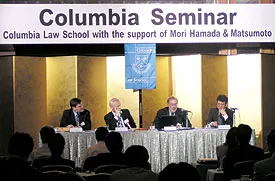
In 2003, the Center hosted a conference in Tokyo called Hostile Mergers and Acquisitions and the Poison Pill in Japan: Prospects and Policy, co-sponsored by the firm of Mori Hamada & Matsumoto. U.S. participants included Professor Ronald Gilsonand William Chandler III, chancellor of the Delaware Court of Chancery.
“With this symposium, we had an impact on the public policy debate in Japan about hostile takeovers and appropriate managerial and judicial responses to them,” Professor Milhaupt notes. "These are now among the biggest topics in Japan, which has witnessed a series of hostile takeover attempts in the two years since the conference.”
In August of this year, the Center will host another Tokyo conference titled Gatekeepers and Corporate Governance. The event, which will examine the roles and responsibilities of capital markets gatekeepers in light of changing regulations and practices, will be the first of its kind in Japan. All Tokyo-based Law School alumni will be invited, along with other leading practitioners. U.S. participants include Dean Schizer, Professor John Coffee, and Professor and SEC Commissioner Harvey Goldschmid ’65.
“We’re focusing on corporate governance in the wake of the corporate scandals in the United States and Japan,” Professor Milhaupt adds. "We hope to enrich the debate in both countries by looking outside our own systems.”
In this spirit, as a way to attract talented students to Columbia, the Center administers the Nagashima Ohno and Tsunematsu Scholarship Fund, made possible by the support of the Tokyo firm of the same name. The fellowship is the brainchild of Ken Tsunematsu ’63 M.C.L., a name partner in the firm. The fund provides scholarships to incoming students with a demonstrated interest in and professional commitment to Japan. For upper class students, the Center offers the Shapiro Fellowship in Japanese law, recipients of which engage in sustained research projects under the direction of Law School professors.
In addition to semester exchanges with Waseda University and Kyushu University, the Center arranges for summer work for students in Japan. In recent years, between six and 10 rising 2Ls have worked in Japanese, American, and British firms in Tokyo, more than any other major law school. Tasuku Matsuo, a visiting scholar in 1984, has hired a Columbia student to work in his firm as a summer associate every year for the past 20 years.
“That lucky student routinely has one of the best experiences of any 1L,” says Professor Milhaupt. “Mr. Matsuo really takes the summer associates under his wing and shows them the inner workings of the Japanese legal system.”
Summer work opportunities also have been created by Morrison & Foerster, which is establishing the Morrison & Foerster Summer Public Interest Fellowships in Japan. The fund will provide stipends for two students to work in the courts, the bar association, or the ministries.
Faculty exchanges are also an important part of the Center’s programs, bringing professors from the University of Tokyo Faculty of Law to teach at Columbia and vice versa. The exchanges give students direct access to experts in Japanese law while providing the Japanese professors with exposure to the American educational system. Historically, the Japanese have majored in law as undergraduates. In 2004, Japanese universities opened their first graduate level law school programs, recognizing a need to train more people specifically for the practice of law as the country’s legal system evolves.
Professor Kentaro Matsubara, who has visited Columbia twice, says the exchange is an eye-opening experience.
“Japanese legal education is currently undergoing a process of major reform,” he says. “This was my opportunity to see how a[n American] law school really did work through taking part in its teaching. I had an excellent group of students and witnessed a vibrant community of scholars committed to discussing diverse ideas.” Professor Matsubara says he benefited as well from presenting his research on Chinese legal systems to legal historians at Columbia, on whose work he has drawn over the years.
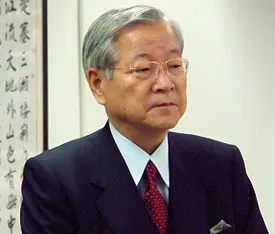
Hisakazu Hirose, from University Tokyo, knew program years through reputations Profs. Young and He also expresses admiration for scholarship of Professor Milhaupt. His work on been not only very impressive, but even surprising to many scholars, as he analyzed problems law with a depth no Japanese researcher has done before in the field.
Professors John Witt and Susan Sturm and Dean Schizer have also taught at Todai on the faculty exchange program. Professor Witt, traveling last summer to Japan for the first time, co-taught with a Japanese professor a two-week course he calls the “greatest hits in American tort law.”
“The students were very interested in learning about American law,” he says. “It’s interesting that tort law as a form of social policy is distinctly American. This was a foreign idea to the Japanese students. Teaching tort law was a great way to open up a conversation about comparative legal policy.”
The Japanese Law Distinguished Lecture Series is another means of promoting education and dialogue. The series was held this past academic year to commemorate the 25th anniversary of the Center’s founding. Speakers have included Mark Ramseyer (Harvard); Mark West ’93 (University of Michigan); Tetsuo Kabe (Japanese Embassy, Washington, D.C.); and Justice Sonobe, among others. The lecture series was generously supported by the law firms Anderson Mori & Tomotsune, and Mitsui Yasuda.
